The evolution of our internationalisation strategy from a historical perspective
Internationalisation is the stable bedrock for BUas’ ambition

Lucette Roovers (Director), Marlie van Dun (Senior Policy Advisor), and Giuliana Scuderi (Policy Advisor) are members of the Global Engagement Team at Breda University of Applied Sciences.
A Dutch pioneer
In 1988, long before internationalisation of higher education began to gain prominence in the Netherlands and Europe, BUas, at that time called NWIT, successfully launched the professional master’s programme in European Tourism Management, together with four other European universities (Madrid, Heilbronn, Chambéry, and Bournemouth), serving as a catalyst for many more international partnerships and networks. In 1990, the fully English-taught bachelor’s programme in International Tourism Management and Consultancy took off, with an internationally composed classroom.
In 1999, more higher education institutes in the Netherlands, supported by the Dutch Ministry of Education, started to translate study programmes into English, aligning with the Bologna Process's push for EU-wide standardisation. The shift to English as a language of instruction aimed to enhance educational quality, global competitiveness, and financial resources. Students also started to display a growing interest in seeking an international education. In that year, NHTV – as it was meanwhile renamed - already hosted 65 foreign undergraduates and approximately 45 foreign exchange students, and was already laying the groundwork for a comprehensive internationalisation strategy, which included international courses, foreign lecturers, and study abroad opportunities.
In the heat of the political debate, BUas strongly defends its international institutional profile.
Towards a structured approach
In 2001, NHTV declared itself an international institute and launched its Strategic Centre for Internationalisation. The first foreign lecturers were hired, bringing to BUas their practical international experience and their global networks.
Around 2006, the Europeanisation of higher education gained momentum, leading to the emergence of transnational programmes and networks. NHTV evolved from ’ad hoc’ small-scale internationalisation initiatives to a structured approach that embraced institutional cooperation and global networking. Collaborative programme development and participation in networks took centre stage.
As the number of international students and staff increased, NHTV encountered new challenges, such as supporting non-Europeans and non-Westerns with diverse cultural backgrounds. During this period, the often underestimated role of lecturers and educational support staff in the process of internationalisation came to the forefront. Moreover, initial steps were taken to enhance the professionalism of staff engaged in international activities.
An international institute in the first place
In 2008, the NVAO introduced internationalisation as a distinctive quality feature in higher education.
At NHTV, diversity and multiculturalism thrived, not least through the active recruitment of students and staff from diverse backgrounds. The emphasis on internalising internationalisation fostered a cultural shift within the organisation, aiming at diminishing the boundaries between international and national students. New policies prioritised the recruitment of international staff proficient in English, set a 15% international student target, and promoted English as the primary communication language.
NHTV transformed into an international educational institute that integrated higher professional education, university education, and, for the first time, research. Intensive collaboration with global institutions to develop joint programmes became a key strategy for promoting internationalisation and academisation.
Training global entrepreneurial professionals
Between 2013 and 2017, NHTV evolved into an entrepreneurial and business-focused institute. Prioritising collaboration with companies and alumni engagement, NHTV expanded its networks globally, with a keen eye on emerging markets (also referred to as hot spots). In Brazil, we established several successful partnerships, for instance with the Federal University of Pernambuco and the University of San Paulo. In China, the Academy for Built Environment & Logistics still has a successful ’train-the-trainer programme’ with the University in Anyang.
In those years NHTV facilitated work placements abroad for over 50% of students. Staff flexibility, involving temporary employment of industry professionals and visiting professors, was aimed at enhancing NHTV's international profile and industry collaboration.
In 2001, NHTV declared itself an international institute and launched its Strategic Centre for Internationalisation.
With a commitment to around 10% foreign employees and 15% international students, NHTV focused on providing expat provisions, building external networks, and collaborating with local authorities to transform Breda into a truly international student city.
From NHTV to BUas
In 2018, NHTV embraced a new identity as Breda University of Applied Sciences. The primary goal at that time was to enhance students' global readiness and cultivate staff awareness and expertise, emphasising the importance of international experiences. As a result, initiatives between 2018 and 2021 strongly focused on incoming and outgoing mobility. This included strengthening staff exchanges, attracting global talent, promoting study abroad opportunities, and enhancing international placements.
On campus, BUas encouraged internationalisation within its community by improving student and staff English proficiency, cross-cultural training, and intercultural skills development in the international classrooms. Figures for 2023 show that today the campus hosts 26% international students and 21% international employees.
The beginning of the national political debate
As the number of international students continued to grow, many Dutch educational institutes, including BUas, grappled with the challenges of providing suitable living accommodation. Research universities located in prominent cities also feared that unchecked growth in international recruitment may lead to overcrowded lecture halls, increased workloads for lecturers, and limited access to study programmes resulting in an overall decrease in the quality of education.
In the heat of the political debate, BUas strongly defends its international institutional profile, vital for its nine interconnected knowledge domains. Many of our study programmes inherently necessitate an international orientation, as professionals in fields such as leisure and events, tourism, hotel management, facility management, games, media, and the built environment rely on a solid understanding of the global context to excel. The necessity for an international profile extends to addressing needs in fields facing contraction, such as logistics, where new talents often need to be sourced from abroad, or in fields experiencing swift global advancements such as data science and artificial intelligence.
BUas+ strategy towards 2025
With the new BUas+ strategy 2022-2025, BUas plans a strategic shift towards a more robust European focus in internationalisation, in line with our sustainability goals.
This shift aligns with the European Union’s call for enhanced collaboration between higher education institutes in Europe and with the aim of leveraging available European funding and opportunities. As a testament to this commitment, BUas has joined the European University Initiative, participating in the European University Alliance KreativEU. The alliance, comprising 11 European universities, aspires to establish a fully European University, emphasising the creative potential of Europe's cultural heritage in teaching, research, and knowledge transfer.
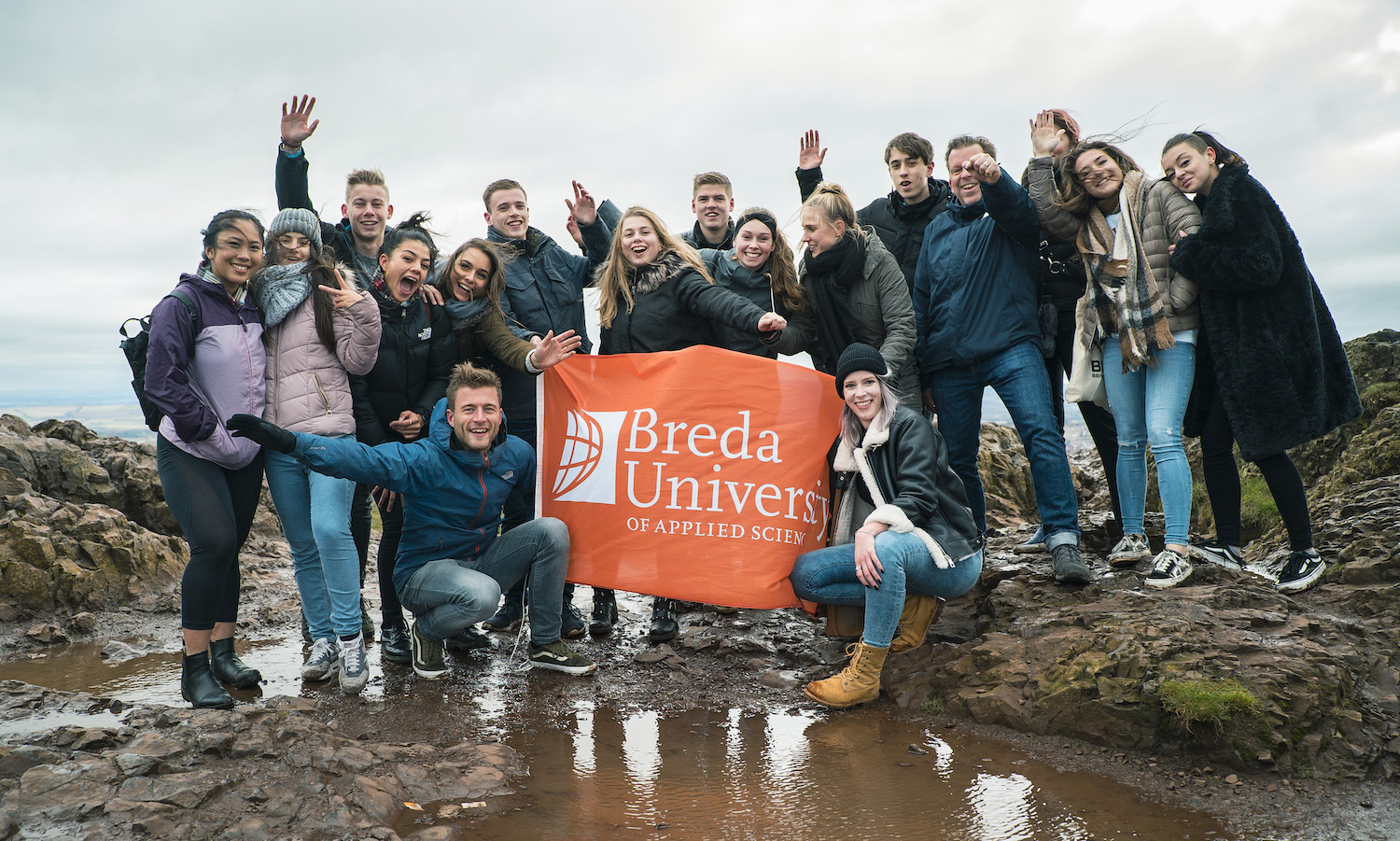
The BUas+ international strategy also focuses on nurturing students’ and staff's international and intercultural skills essential for thriving in a global career by ensuring access to meaningful experiences right on campus, with less emphasis on international physical mobility, especially outside Europe. In the next few years, the focus will be on the on-campus global activities, which reflects our dedication to sustainability, diversity, and inclusion: international guest lectures, blended intensive programmes, and virtual collaborative arrangements are some of the initiatives that our academies are developing.
By fostering an international, vibrant, and inclusive campus community, BUas empowers students and staff to excel in the global arena, boosting their employability, but also enhancing their overall well-being, satisfaction, integration, and sense of belonging.
We will also strengthen our commitment to supporting international students and staff, in establishing networks with peers and integrating into Dutch society. Additionally, we aim to increase their stay rate in the country by offering language and cultural training.
BUas empowers students and staff to excel in the global arena.
This growing focus on the campus environment will enhance collaboration across academies, with a stronger emphasis on sharing knowledge and experiences. Led by a passionate Internationalisation at Home Team, academies are already proactively engaged in establishing international learning outcomes across their curricula, and they are experimenting with monitoring systems, such as the Global Mind Monitor.
With its new international strategy, BUas reiterates its commitment to a holistic approach to internationalisation, consistently aligned with the evolving needs of its community while remaining attuned to societal demands and global developments. Internationalisation evolves hand in hand with BUas' objectives, serving as a catalyst for growth, fostering an environment conducive to skill and talent development among students and staff, and facilitating meaningful connections with key stakeholders on the global stage.